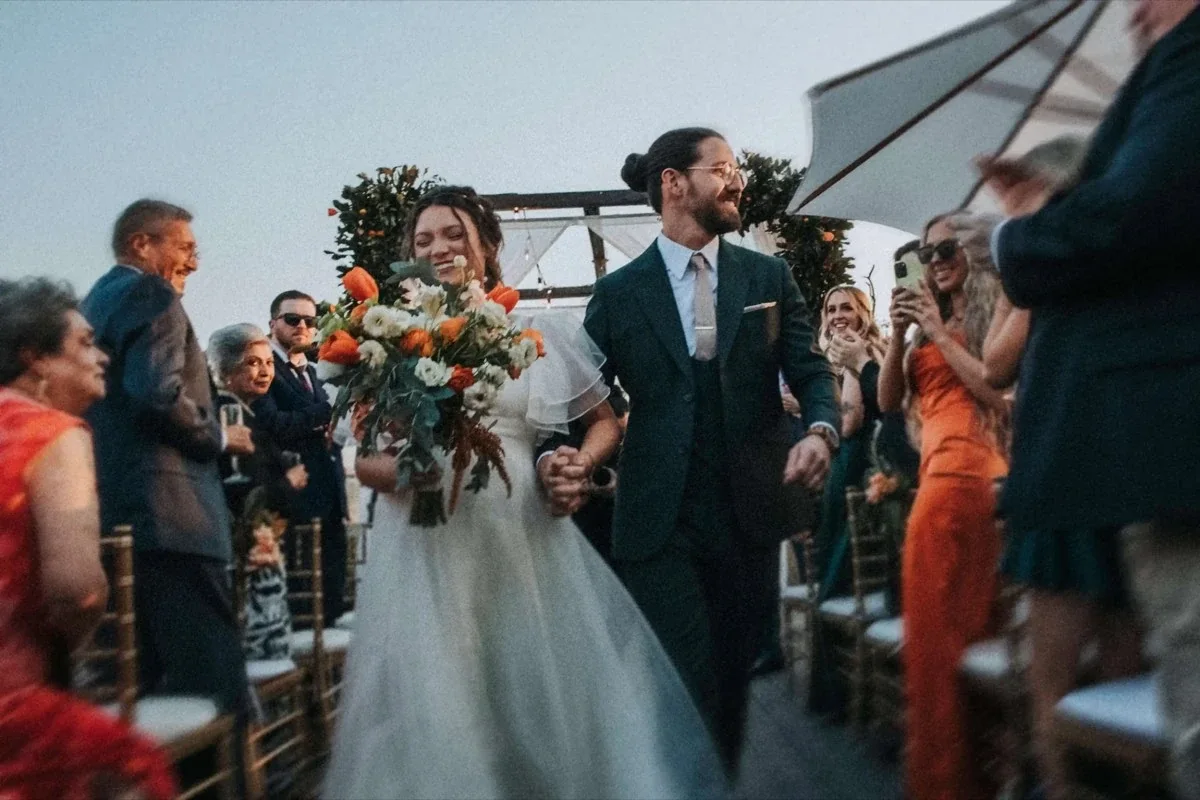
After documenting more than 300 weddings, there's one thing I can say with certainty: your wedding day schedule matters more for your photos than almost any other decision you'll make. More than the photographer you choose, more than the venue, more than the dress. A rushed timeline hurries every moment of the day — and no editing or talent can bring back a moment that was lived in a hurry.
This guide isn't about cameras or angles. It's about how to arrange the hours of your wedding day so that, almost without noticing, you end up with photos that feel real — because there was enough time for those moments to actually happen.
The most common scheduling mistake: not thinking about light
Most couples pick their ceremony time based on convenience — what works for the venue, for out-of-town guests, or for the reception schedule. Almost no one asks where the sun will be at that hour, and that's the single question that changes the outcome the most.
An outdoor ceremony at noon or 1pm means harsh light, hard shadows under the eyes, and squinting in every group photo. The same ceremony two or three hours before sunset transforms completely: soft light, warm tones, and an atmosphere that already looks good before anyone does anything differently.
If your ceremony is outdoors, my recommendation is simple: schedule it 2 to 3 hours before sunset on your wedding date. You can look that up weeks in advance — sunset in December isn't the same as sunset in July.
How much time to leave for couple photos
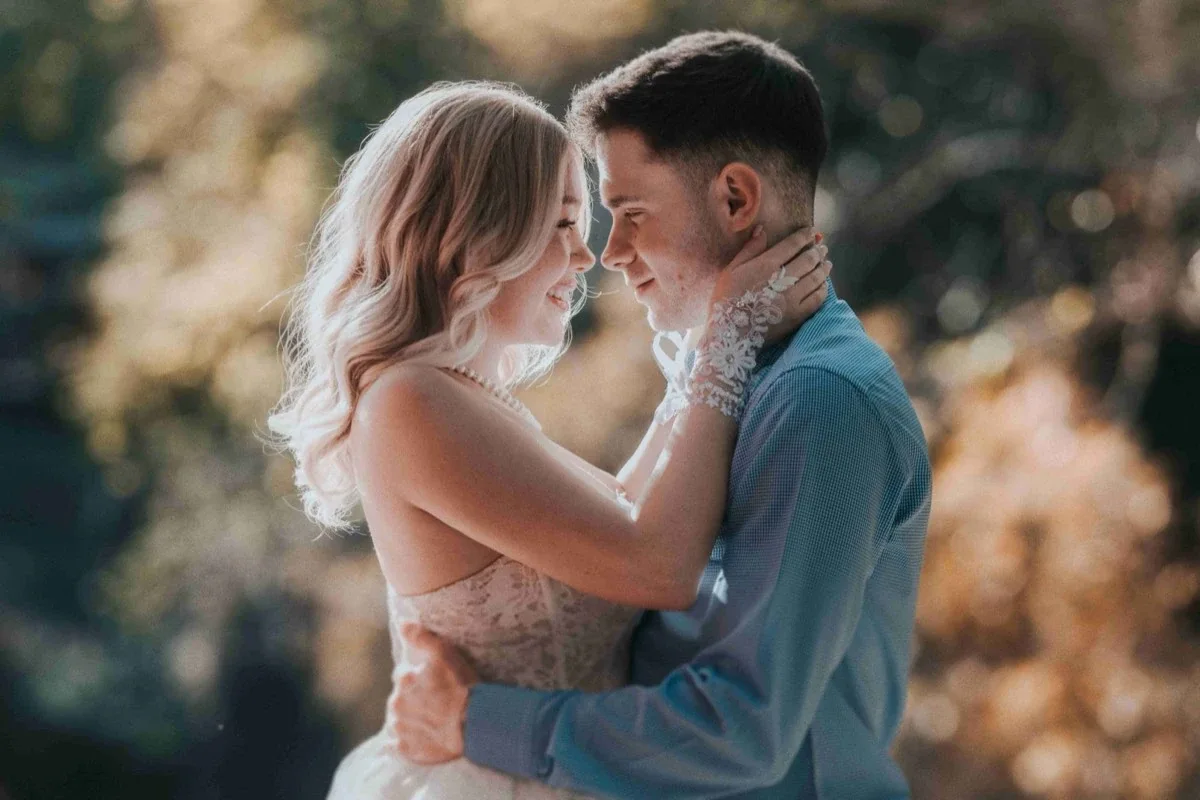
"Golden hour" — those 40 to 60 minutes before the sun fully sets — is where most of the couple photos that end up framed actually happen. The light comes in sideways, everything looks golden, and it's almost impossible for a photo to come out badly there.
The problem is that this block is almost always the first thing sacrificed when the day runs late. My advice: treat it as a fixed commitment on the timeline, not as something you'll "get to if there's time." 30 to 45 real minutes — no guests, no phones, just the two of you — is enough for the set of photos you'll actually want to see in 10 years.
Getting ready: the part that almost always gets rushed
Getting ready — putting on the dress, hair and makeup, nervous laughter with the bridal party — is some of the most honest material of the day, and also usually the first thing trimmed when the overall schedule tightens up.
As a documentary photographer, I prefer arriving with margin: 2 to 2.5 hours before the ceremony, depending on how many people are getting ready in the same place. That extra time isn't for "more posing" — it's so I can wait for the real moment without having to interrupt anyone to hurry them along.
A sample timeline (afternoon ceremony)
Here's what I typically recommend for a wedding with a ceremony around 5pm and sunset near 7pm:
- 2:00 PMPhotographer arrives — getting ready begins
- 4:15 PMCouple ready — private moment or "first look" (optional)
- 5:00 PMCeremony
- 5:45 PMFamily and group photos
- 6:15 PMCouple photos — golden hour
- 7:00 PMCocktail hour
- 8:00 PMReception entrance, first dance
It's not a rigid formula — every wedding, venue, and tradition changes the specifics — but the structure (getting ready with margin, ceremony with good light, a protected block for couple photos) works for almost any format.
What to do if your ceremony has a fixed time
Not every couple can move their ceremony time — religious weddings with a set mass schedule, venues with their own rules, or family traditions that aren't negotiable. If that's your situation, it doesn't mean you have to settle for harsh light in your photos.
The most common solution I use: moving up a "first look" before the ceremony, while the light is still manageable, to bank the most important couple photos there. That way sunset becomes a bonus — not a dependency — and the rest of the timeline can be arranged with less pressure.
If you'd rather not do a first look for personal or traditional reasons, another option is moving the couple-photo block to the reception, using ambient or party lighting as a creative tool — a different look, but just as real when it's planned with intention.
If you're putting together your wedding day timeline and want a second opinion, I'm happy to help you plan it around the light at your specific date and venue.
If you want to understand more about how I approach the rest of the day — not just the schedule, but the philosophy —, you can read how I document a wedding without directing the scene, or see packages and pricing directly.