
There's a question I get asked on almost every first call with a couple: "Are you going to tell us what to do?" My answer is always the same: no. My work begins exactly where direction ends.
I've been photographing weddings for over a decade, and in all that time I've learned that the most honest moment of a wedding is almost never the one someone planned. It's the glance exchanged when no one's watching, the hug that lasts a second too long, the nervous laugh right before walking out to the ceremony. Those instants aren't directed — they're waited for.
Documenting, not building
When I talk about a documentary style, I don't mean a filter or an aesthetic applied later in editing. I mean a decision I make from the first minute of coverage: I won't interrupt what's happening to make it look better on camera.
That means giving up control. I can't guarantee everyone will look at the lens, or that the light will fall exactly where I'd like. What I can guarantee is that what shows up in your photos actually happened — I didn't stage it.
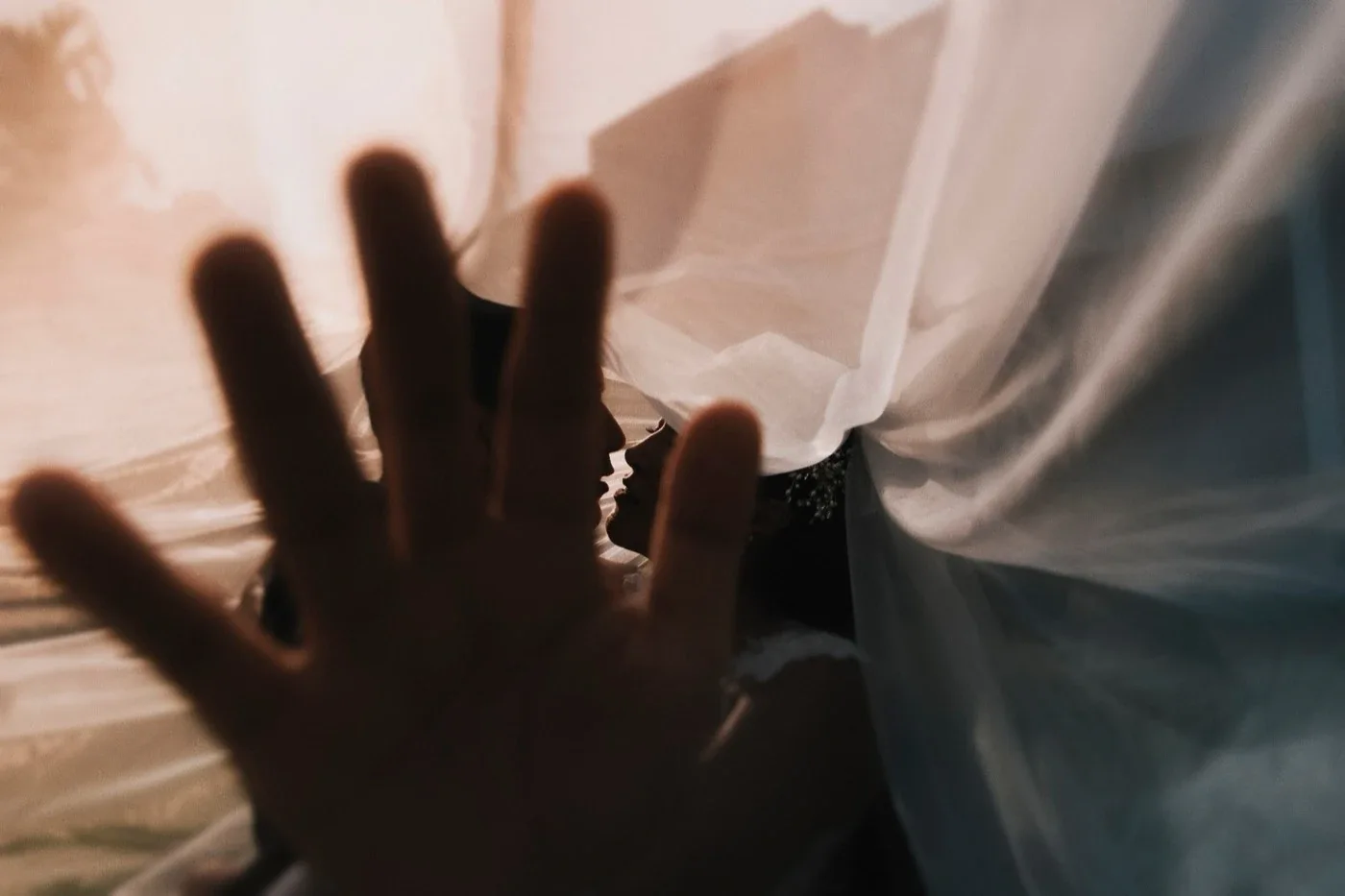
Why natural light matters so much in this approach
Working without directing scenes means solving with what's there: the light coming through a window at four in the afternoon, a tree's shadow in the garden, backlight from an open door during the reception. I don't build a set — I read the space and move within it.
This completely changes the way of working compared to a traditional photographer. Instead of stopping the event to arrange people and adjust lights, I learn the path of light at the venue before the wedding starts, and spend the rest of the day anticipating where the best moment will happen — not constructing it.
What's lost (and gained) by not directing
To be honest: this style doesn't produce the "perfect" photo in the classic sense. You won't get that shot where all fifteen guests look at the camera smiling at the same time. What you will have is a wedding that, years later, feels exactly like you remember it — because that's exactly how it was.
There's something I notice every time in the galleries I deliver: the couples who get most emotional looking at their photos aren't the ones with the best hair or the most technically perfect lighting. They're the ones who recognize the exact moment they were feeling something real, without thinking about the camera.
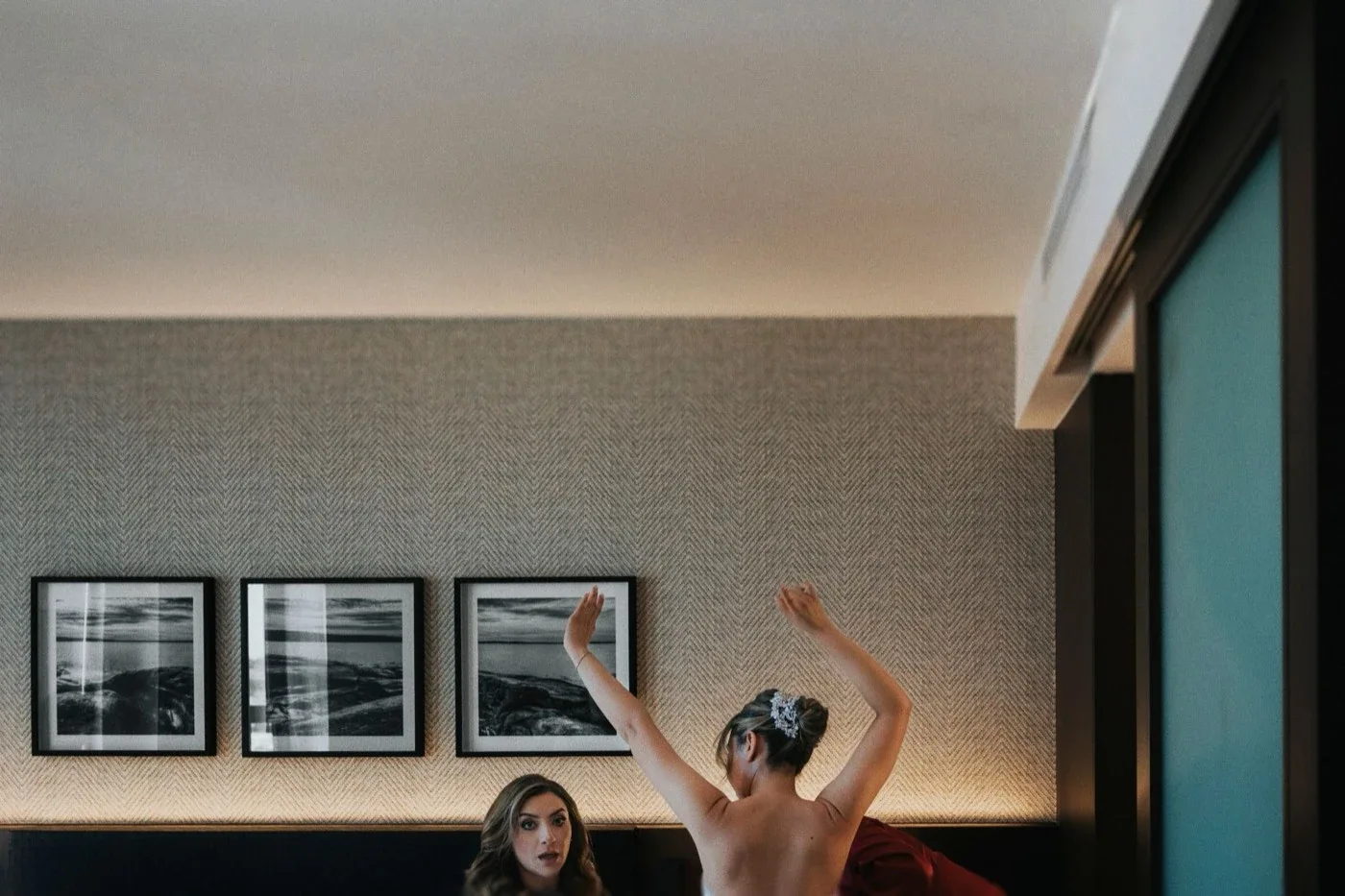
How this plays out on a wedding day
In practice, my presence on the wedding day is more discreet than directive. I arrive early to understand the venue's logistics and light. During the ceremony and reception, I'm constantly moving to find an angle, but I rarely ask anyone to stop or repeat a gesture. If something didn't happen, it didn't happen — I won't fabricate it afterward.
This also changes the experience for you as a couple. There's no pressure to "perform" for the camera for eight or ten hours. At some point in the day, most people forget I'm there — and that's exactly where what I really want to capture begins to happen.
If this way of seeing a wedding — real, unrehearsed, undirected — resonates with you, the documentary style is probably for you. If you prefer full control over every image, there are other approaches (and photographers) that might serve you better, and it's good to recognize that before hiring anyone.
For a more practical guide on what to ask before hiring a documentary photographer, see how I work: before you choose a documentary photographer. And if you already have a date, here are my packages and pricing.